The Landlord's Checklist: Getting a Rental Property Ready Between Tenancies
Every day a rental property sits empty costs money. Decorating is almost always the bottleneck. This checklist cuts through it — what to assess, what to fix, and how to get back on the market fast.
Published by The Decorator Guy • July 2026 • Rental Property Decorating
The gap between a tenancy ending and the next one beginning is pure cost. Mortgage or loan payments continue, letting agent fees continue, and the longer the property sits empty the more pressure there is to accept a lower offer on the next tenancy. Getting the redecoration done quickly and to a standard that holds up for the next let is not about aesthetics — it is about protecting the income the property is supposed to generate.
Most landlords who have been burned by slow or poor-quality between-tenancy decorating describe the same experience: a decorator who was hard to get hold of, started late, worked slowly, and left a finish that started to chip and mark within months of the new tenancy beginning. This checklist is designed to help you avoid that outcome entirely.
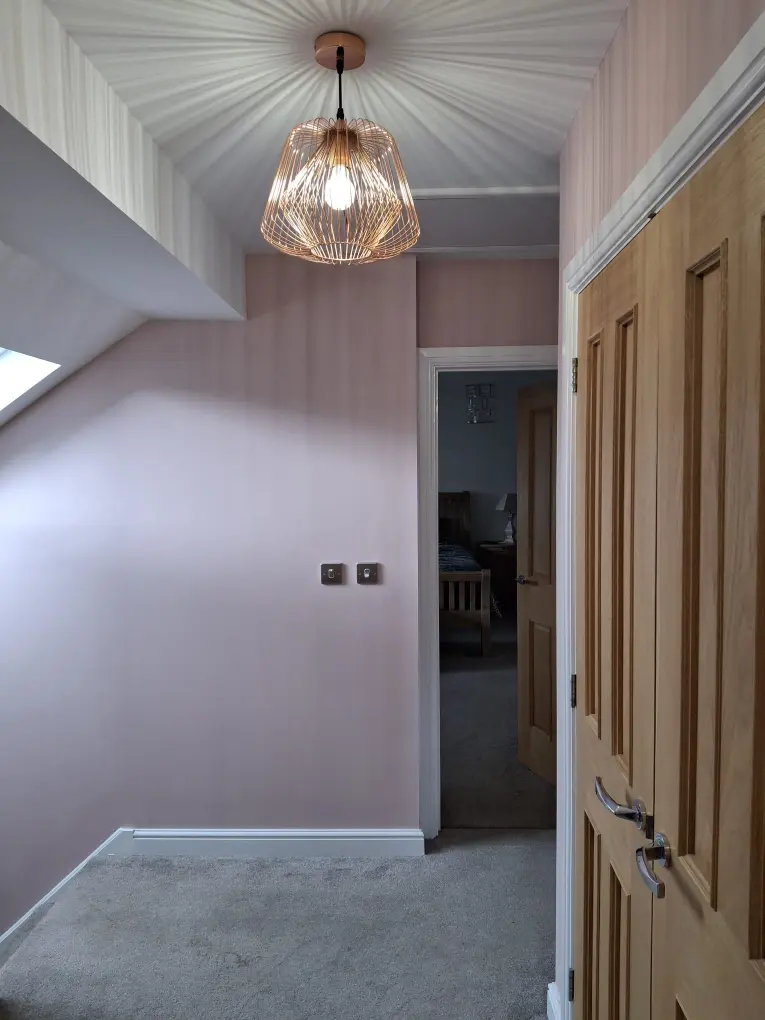
Recent rental property decorating work by The Decorator Guy across North Tyneside and the wider North East. View the full portfolio.
Start with an honest assessment
Before booking anyone in, walk the property and be clear about what actually needs doing. There is a difference between a property that needs a full redecorate and one that needs targeted touch-ups. Getting that call right saves time and money.
- Walls — scuffs, marks, holes from picture hooks, any areas of flaking or damp-related staining
- Ceilings — particularly bathrooms and kitchens where steam and moisture cause discolouration
- Woodwork — skirting boards, door frames and doors take the most punishment and show wear fastest
- Window frames — UPVC rarely needs painting, but timber frames in older properties often do
- Mould or damp — must be treated before any decorating, not painted over
Mould painted over is mould that comes back. A decorator who goes straight to the brush without treating the cause will leave you with the same problem within three months. Always confirm that mould treatment is included before any painting begins.
The room-by-room checklist
1
All ceilings — full repaint
Ceilings show age and nicotine more than any other surface. A fresh brilliant white ceiling lifts every room and makes the whole property feel cleaner and newer.
2
Walls — full repaint in neutral
Avoid anything bold. Neutral mid-tones photograph well, appeal broadly to tenants and are easy to maintain between lets. Two coats minimum over a properly prepared surface.
3
All woodwork — skirting, frames, doors
Scuffed skirting and marked door frames are the first thing a prospective tenant notices. Gloss or satin throughout. Do not skip this even if the walls look acceptable.
4
Fill and prepare all damage first
Holes from picture hooks, surface damage from furniture, any areas of blown plaster. A professional decorator does this as standard — confirm it is included in the quote.
5
Kitchen and bathroom — moisture-resistant paint
Standard emulsion in bathrooms fails within months. Specify moisture-resistant or bathroom-grade products. Any decorator quoting for bathroom decorating should be using these as a matter of course.
6
Treat mould before painting
Specialist mould treatment first, then decorating. Not the other way round. If there is an underlying damp issue it needs addressing before the decorator arrives — painting over it is money wasted.
Colour choices that work for lettings
This is where landlords lose time. Bold choices narrow your tenant pool and make properties harder to photograph. Neutral is the answer, every time.
- Ceilings — brilliant white throughout, no exceptions
- Walls — a warm neutral mid-tone. Dulux Mist, equivalent from a trade range, or similar
- Woodwork — brilliant white in satin or gloss
- Feature walls — avoid unless it is a premium let where it adds genuine value
Turnaround — what is realistic
A standard 2-3 bedroom property decorated throughout — walls, ceilings and woodwork — takes 2-3 working days with a professional decorator. That assumes the property is empty and access is straightforward.
The mistake landlords make is booking too late. By the time keys are back and the inventory is done, they are already a week behind. Book your decorator the moment notice is given with a provisional start date. A professional decorator will hold the slot and adjust if the exit date moves.
We work directly with landlords and letting agents across North Tyneside, Newcastle and the wider North East. Book in advance and we will hold your slot — adjustable if the tenancy exit date moves.
Document everything before work starts
If there is tenant damage, photograph it before any work begins. We can provide before and after documentation on request — useful if you are pursuing a deposit deduction and need evidence of condition at the start of the redecoration.
This is particularly relevant for larger repairs — holes in walls, damaged doors, water-stained ceilings from unreported leaks. Inventory check-out photos alone may not be enough. A decorator's record of what was found and remedied adds weight to a deposit claim.
Managing more than one property
If you manage three or more properties, calling around for a decorator each time a tenancy ends is inefficient and inconsistent. A maintenance contract arrangement — where we become your regular decorator across your portfolio — removes the bottleneck entirely. See our property maintenance contracts page for how that works in practice.
Frequently asked questions
How quickly can a rental property be redecorated between tenancies?
Most standard 2-3 bedroom properties can be fully redecorated — walls, ceilings and woodwork — within 2-3 working days. Booking as soon as notice is given, rather than waiting for keys to be returned, keeps void periods to a minimum.
What colours should landlords use when redecorating?
Neutral mid-tone walls with white or warm-white ceilings and white woodwork. Neutral palettes photograph well, appeal to the widest range of tenants, and are easy to maintain between lets.
Should mould be treated before redecorating?
Yes, always. Painting over mould without treating the underlying cause will result in it returning within months. A professional decorator will treat affected areas with specialist mould killer before any painting begins.
Can you provide documentation for tenant damage before redecorating?
Yes. We photograph and document the condition of the property before work begins, providing before and after records that are useful for deposit dispute purposes.
Landlord and commercial decorating services
Rental properties, portfolios, offices and maintenance contracts across the North East
Need a rental property redecorated?
Fast turnaround, neutral palettes, durable finish. Written quote within 48 hours — we can usually start within the week.
Get a Free Quote
Call 07956 155437
 Get Free Quotation